
How IAS Namrata Jain is Bringing Schools and Services to the Most Remote Areas of Chhattisgarh: 800 First-Time Students, 10,000+ Aadhaar Updates
In the remote and forested interiors of Narayanpur district in Chhattisgarh, distance has never been just geographical.It has long meant exclusion from systems, from services and most visibly from education.Villages scattered across forested and hilly terrain remained physically isolated, with littl
In the remote and forested interiors of Narayanpur district in Chhattisgarh, distance has never been just geographical.It has long meant exclusion from systems, from services and most visibly from education.Villages scattered across forested and hilly terrain remained physically isolated, with little to no road connectivity.Plus prolonged impact of Left Wing Extremism has also played a major role in isolation, restricting administrative access and preventing the expansion of basic services such as schools.
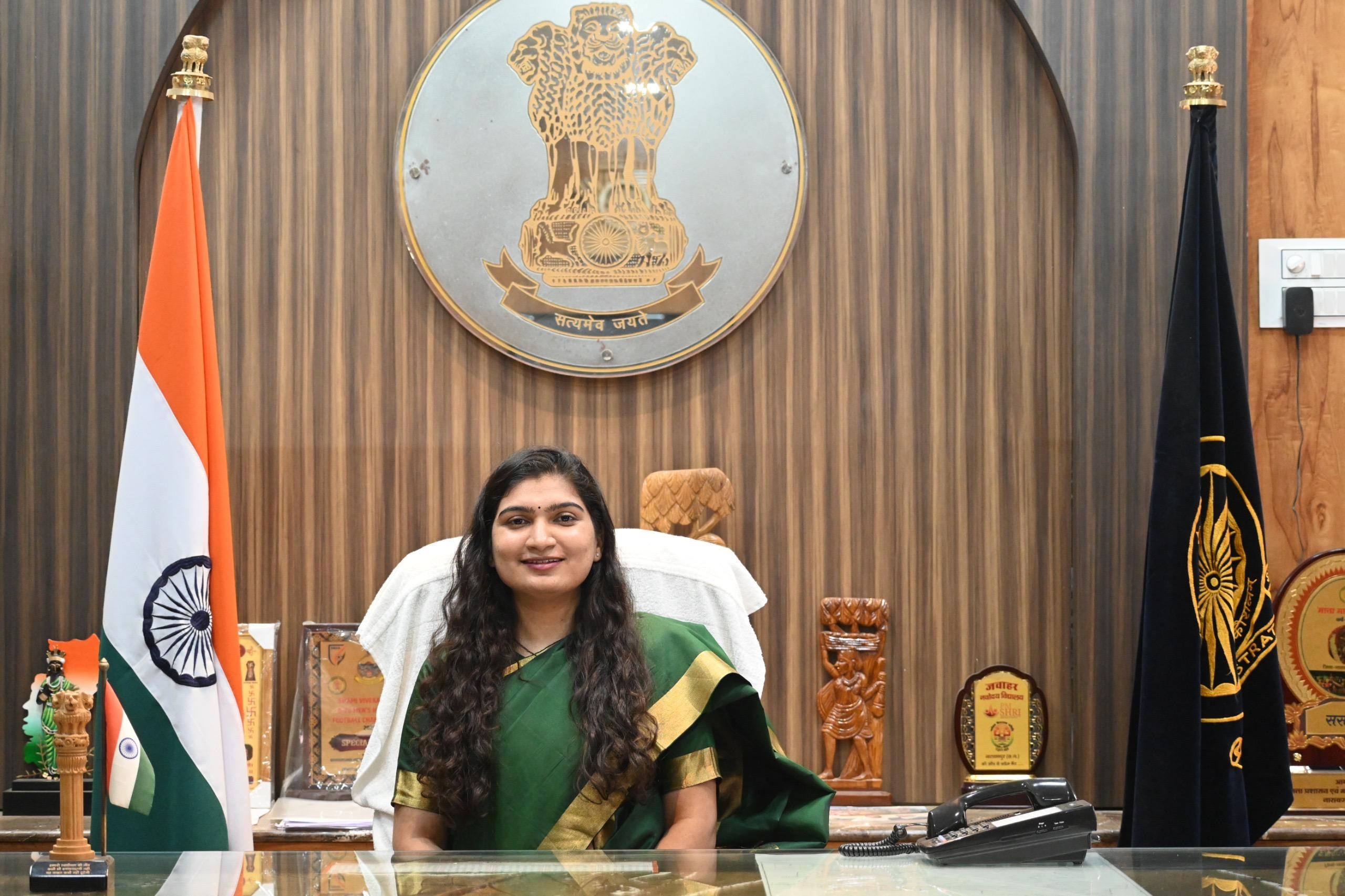
To address this, IAS Namrata Jain, 2019 Batch collector of Chhattisgarh cadre and currently posted as collector of Narayanpur launched impactful initiatives - School Keinta and the Sushasan Express- that brings both education and governance directly to the last mile.
A shift in approach: From schools to children
School Keinta, meaning “School is Calling”.The initiative represents a fundamental shift in governance, from focusing on infrastructure to focusing on the child.Instead of asking why children were not coming to school,the administration began asking where these children were and what prevented them from accessing education.
Making the invisible visible
Under this a district-wide, door-to-door survey covering 22,364 households across 83 Gram Panchayats identified 2,965 out-of-school children-1,360 never enrolled and 1,605 dropouts. For the first time, each child was individually mapped.Governance shifted from estimation to precision, ensuring that no child remained outside the system.
Bringing schools to the doorstep
With this clarity, schools were brought into habitations, closer to children’s lives and realities.Ten non-functional schools were reopened and 24 new primary schools were established in remote habitations.Together, these efforts ensured that over 800 children gained direct access to schooling, many for the first time.
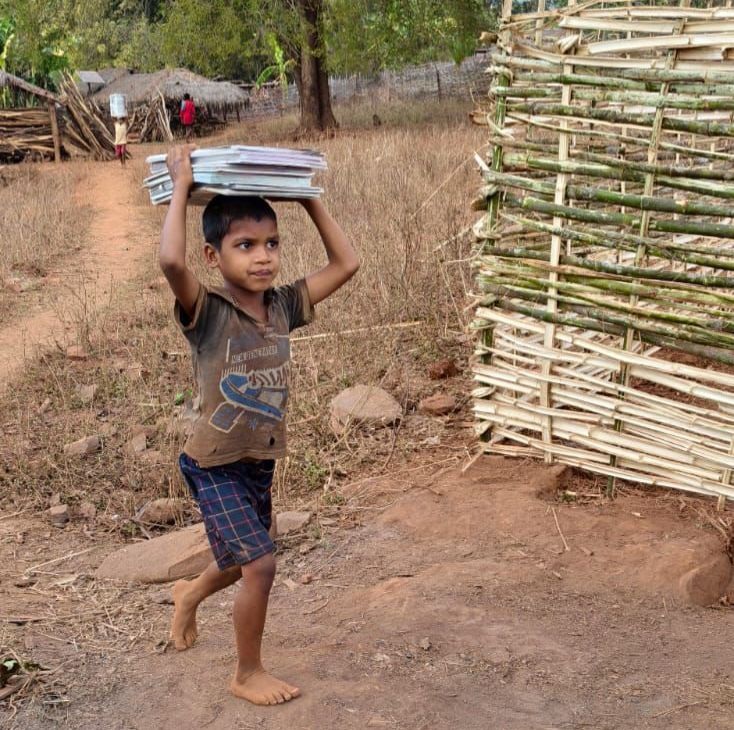
Kodenar, a small habitation with just 14 families had never witnessed a school within its boundaries.On 25 February 2026,for the first time since Independence, a school was formally opened.Children gathered, hesitant yet curious.For many,this was their first encounter with books, uniforms, and a classroom environment. For the first time, the national anthem was sung collectively in Kodenar.All 25 children were enrolled that day.What changed in Kodenar was not just access. It was aspiration.
In Rekavaya-Aamapara, where a Bhoomkaal school run by Maoist groups functioned as the only form of education ,outside the formal system without continuity or recognition. When the administration reached Rekavaya, the existing system was integrated into the government framework and a residential hostel was established, ensuring continuity and stability.
Recognising that learning begins early, 49 new Anganwadi centres were operationalised reaching over 1,200 children with nutrition, early education and maternal care.For many, this was their first experience of structured learning,creating a strong foundation for future schooling.
Sushasan Express: Governance at the doorstep
Complementing this is the Sushasan Express,a mobile governance initiative launched in January 2026 to deliver public services at the doorstep.Functioning as a travelling service unit, it brings officials into remote villages to provide on-the-spot access to essential documentation and welfare schemes.
Thousands of beneficiaries have accessed services, including Aadhaar cards,Ayushman cards, and certificates.A total of 10,682 Aadhaar updates have been completed, along with pension services, MGNREGA job cards and voter registrations.Health and disability surveys are also conducted during these camps, ensuring a more comprehensive outreach.Additionally villages once considered inaccessible are now regularly covered. A daily monitoring system tracks applications, ensuring transparency and timely delivery.
In Narayanpur, governance is no longer waiting at the block office. It is travelling to the doorstep turning distance into access, and access into inclusion.



Comments (0)
No comments yet. Be the first.