
Living 104 years, retired IPS officer Puri doesn't feel his age
He is a 104-years-old, but doesn’t feel his age. He is enjoying the life to the fullest. M L Puri born on February 9, 1917 to the parents late Dwaraka Das Puri and late Mrs Naurati Devi Puri at Shehali village in Ludhiana district in Punjab looks back nostalgically to his days of pre and post-
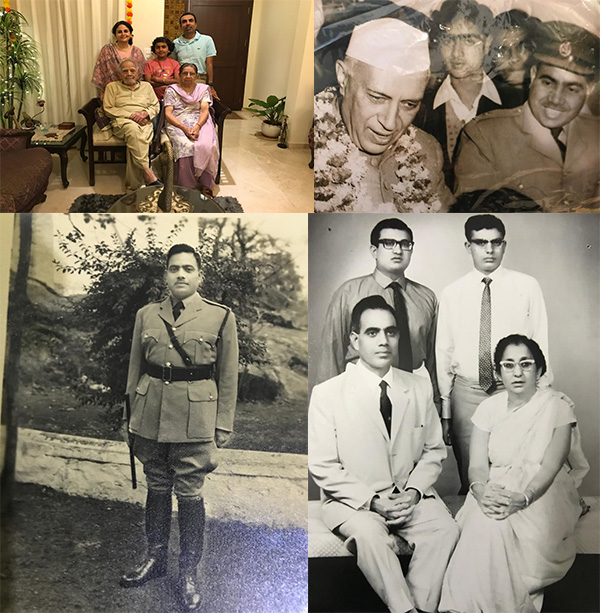
He is a 104-years-old, but doesn’t feel his age. He is enjoying the life to the fullest. M L Puri born on February 9, 1917 to the parents late Dwaraka Das Puri and late Mrs Naurati Devi Puri at Shehali village in Ludhiana district in Punjab looks back nostalgically to his days of pre and post-independence periods. He is a key witness of modern governance under the leadership of Pt Jawahar Lal Nehru as first Prime Minister of India. Puri was an IPS officer of first recruitment of IPS officers in 1950 batch and a lone surviving IPS officer of this batch. Presently, he is enjoying his retiring life with family members in Bangalore. Puri completed matriculation (10th) - from Patiala- stood 1st and received a gold medal, 1932 and 12th from Patiala and shifted to Lahore. He did his graduation in Economics, from DAV College Lahore and topped with honours and got scholarship. Puri obtained Masters in Economics from Govt College Lahore 1939, topped in the University with a 1st class. He got a job with Mahindra College, Patiala and worked from December 7 1940 till June 1945. In July 1945, he was posted as Assistant Regional Food Commissioner with the Food department which had its Headquarters in Lahore hence posted in Lahore. With partition in 1947, the Headquarters was shifted to Shimla where he was promoted as Deputy Regional Food Commissioner till 1950. In 1950, the Government of India appointed a Special Recruitment Board to make selections for IAS and IPS. About 100 IAS and 95 IPS selections were made and he was one of the IPS Officers who got selected. He completed his training in March 1951 and was allotted to the Punjab cadre and continued till 1963. The positions he took were - ASP of Jalandhar (1951-53), ASP Hoshiarpur (2 months), ASP- Ambala ( March 53-Aug 53). He got promoted in September 1953 as SP of Gurdaspur border area. In 1954, he was shifted to CID- HQ in Shimla for six months. From February 55 till June 58, he was promoted as ISP, Punjab- a posting he enjoyed the most. From 58 to 61 - SSP Ludhiana; from June 61- April 62 - SSP, Karnal and continued till June 1963 and did not return to Punjab cadre as he was deputed to the Intelligence Bureau. He took a short leave for four months to construct his home in Chandigarh. In the next set of service from July 1963 till retirement in February 1975, he was with the Government of India in the rank of DIG with the Intelligence Bureau in various positions. His designation at IB was Deputy Director and was sent to England for three months training. On his return, he was appointed as Commandment of Frontier Administration Office Training Academy (FOATC) which was set up in Mahabaleshwar. This was a survival training program, wherein six British Instructors were appointed to run an eight week program. This position continued till June 66. Then he was transferred to Shimla, as Divisional Organiser with the HP & Punjab Commission where he continued from July 1966 till 1968. This was a cover name as part of IB, it was called SSB (Sashastra Seema Bal) under the PMO office which was set up after the Indo-China war to control the border but not in uniform. He had the Indo-Tibet Border Police (ITBP) operating under his command but since they are a uniformed force, officially they were under the then DIG. In the later part of 1968, he fell ill and after recovery requested to be shifted to Delhi. So in 1969, he took charge of the Central Industrial Security Force (CISF) and set up security forces to take care of Government run sea ports, airports, steel plants etc all belonging to Government of India. He continued at the rank of DIG heading CISF from March 1970 till he retired in February 1975, based in Delhi for five years.




Comments (0)
No comments yet. Be the first.