
POLITICS
High ranking officials suggest that PM Modi has fully pivoted from Nehru’s policy on Nuclear Power! Prime Minister Narendra Modi’s recent announcement to open India’s nuclear sector to private players marks a pivotal shift from the state monopoly enshrined in the Atomic Energy Act
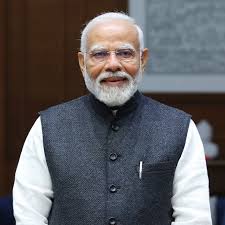
High ranking officials suggest that PM Modi has fully pivoted from Nehru’s policy on Nuclear Power!
Prime Minister Narendra Modi’s recent announcement to open India’s nuclear sector to private players marks a pivotal shift from the state monopoly enshrined in the Atomic Energy Act of 1962, enacted under Jawaharlal Nehru’s leadership. This reform, via the forthcoming Atomic Energy Bill 2025, amends the 1962 Act and Civil Liability for Nuclear Damage Act, 2010, enabling private firms to develop small modular reactors (SMRs), advanced reactors, and innovations previously restricted to government entities like NPCIL. High-level sources view this as dismantling Nehru’s socialist legacy of centralised control over strategic sectors, including nuclear energy initiated in 1948 for peaceful, state-led development. Speculatively, private giants like Reliance or Tata could invest billions, accelerating capacity from 8 GW to 100 GW by 2047, mirroring space sector liberalization and boosting energy security amid net-zero goals. Critics may decry safety risks or foreign influence, but proponents hail it as Modi’s “Viksit Bharat” triumph, replacing bureaucratic inertia with market dynamism for technological sovereignty.
Putin to meet Steve Witkoff before his visit to India?
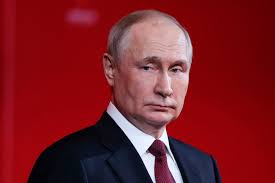
The scheduled meeting between Russian President Vladimir Putin and U.S. special envoy Steve Witkoff in early December, just before Putin’s visit to India, signals ongoing efforts involving Russia, the U.S., and India amid complex geopolitical and trade tensions. Witkoff’s trip to Moscow aims to push forward peace talks related to the Russia-Ukraine conflict, which remains a pivotal issue affecting global diplomacy and trade dynamics. Concurrently, India is navigating its strategic autonomy by balancing its historically strong ties with Russia—especially in defense acquisitions like the S-400 missile systems—and growing economic and trade negotiations with the U.S., which has imposed tariffs partly due to India’s Russian oil imports.
The deadlock in India-U.S. trade talks largely revolves around U.S. demands for India to reduce its Russian oil purchases amid Western sanctions on Russia’s oil industry. India, however, is cautiously diversifying its oil imports away from Russia but has not committed to a complete halt, reflecting its balancing act between energy security and geopolitical pressures. Putin’s meeting with Witkoff could be part of broader maneuvering to shape a diplomatic environment ahead of his India visit, where multilateral dealings concerning energy, defense, and strategic partnerships will be reviewed. Thus, the trilateral interactions in this period are likely an intertwined dance of diplomacy, with trade, energy, and conflict resolution interlinked against a backdrop of shifting alliances.
AAP MP meets Amit Shah
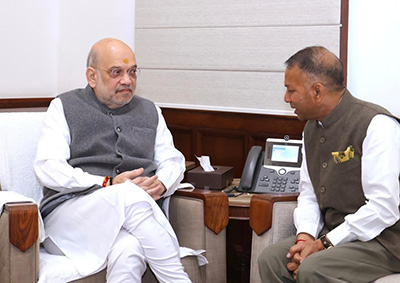
Newly made AAP Member of Rajya Sabha Rajinder Gupta made a courtesy call to Union Home Minister Amit Shah on Monday. Any Significance?


Comments (0)
No comments yet. Be the first.